
Host cities & stadiums · Australia 2027

Seven cities. Eight stadiums. One trophy.

Rugby World Cup 2027 runs from the opening match in Perth on 1 October to the Final at Stadium Australia in Sydney. This guide covers every venue — capacity, which matches it hosts, how to get there on match day, and what to do with the days in between.

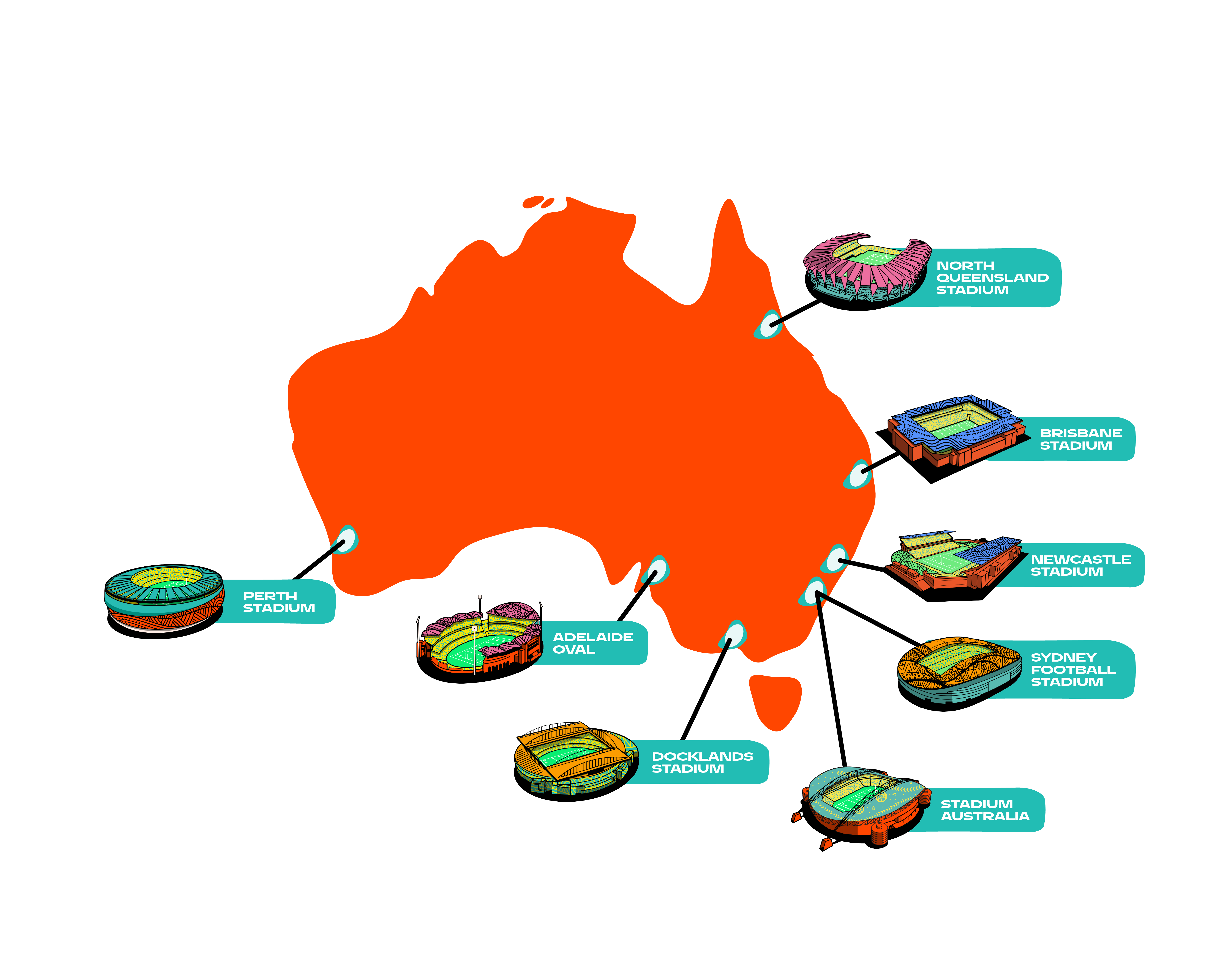
Map of Australia showing the eight Rugby World Cup 2027 stadiums

PERTH | BOORLOO

Perth

Western Australia · Perth Airport (PER) — 20–30 min to the CBD

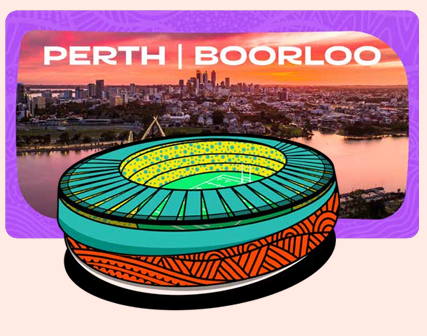
Perth Stadium illustration

Perth Stadium

Opened in 2018 beside the Swan River and repeatedly awarded for its design and fan experience. It hosts the RWC 2027 opening match on 1 October 2027.

Capacity
60,000
Matches
Five pool matches (including the opening match) and two Round of 16
Getting around
  • Match-day rail and bus travel is usually included with a valid match ticket — check your ticket conditions before you travel.
  • The stadium sits a short walk across Matagarup Bridge from East Perth, so many fans walk in from the city side.
  • Allow extra time for the opening match: expect the busiest arrival window of the tournament.
Things to do
  • Day trip to Rottnest Island / Wadjemup by ferry from Barrack Street Jetty
  • Swan Valley wine and brewery route, 30 minutes from the CBD
  • Kings Park and Botanic Garden for the best skyline views
  • Fremantle markets, street art and the harbour seafood strip

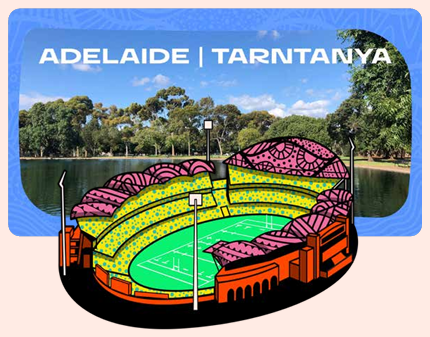
ADELAIDE | TARNTANYA

Adelaide

South Australia · Adelaide Airport (ADL) — 15–20 min to the CBD

Adelaide Oval illustration

Adelaide Oval

A riverside ground famous for blending heritage grandstands with a modern rebuild. It hosted Rugby World Cup 2003 matches, including Australia's win over Namibia.

Capacity
53,000
Matches
Six pool matches
Getting around
  • The Oval is a 10-minute walk from the CBD across the Torrens footbridge — no transport needed for most hotels.
  • Free city tram runs through the centre; trains and buses connect the Adelaide Hills and coast.
  • Wine-region transfers to the Barossa and McLaren Vale take about an hour each way.
Things to do
  • Barossa Valley and McLaren Vale cellar doors
  • Adelaide Central Market for breakfast before a day match
  • Glenelg beach by tram for sunset
  • Kangaroo Island extension for wildlife and coastline

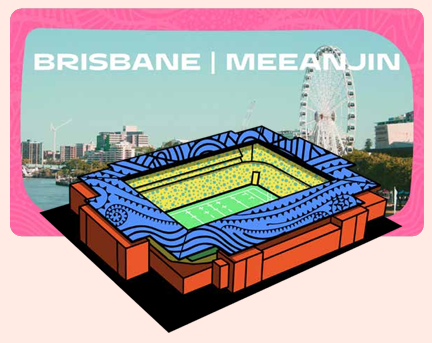
BRISBANE | MEEANJIN

Brisbane

Queensland · Brisbane Airport (BNE) — Airtrain to the CBD in 20 min

Brisbane Stadium illustration

Brisbane Stadium

Known as "The Cauldron" for the way the stands sit tight to the pitch. It staged nine Rugby World Cup matches in 2003 and has hosted 13 of the teams qualified for 2027.

Capacity
52,000
Matches
Six pool matches, two Round of 16 and two quarter-finals
Getting around
  • Take the train to Milton or South Brisbane and walk in — driving to the ground is not recommended.
  • CityCat ferries are the most scenic way to move between the CBD, South Bank and West End.
  • Gold Coast and Sunshine Coast are both roughly an hour away if you are basing yourself at the beach.
Things to do
  • South Bank Parklands, Streets Beach and the Wheel of Brisbane
  • Mount Coot-tha lookout for city and hinterland views
  • Lone Pine Koala Sanctuary river cruise
  • Day trip to Moreton Island / Mulgumpin for sand dunes and snorkelling

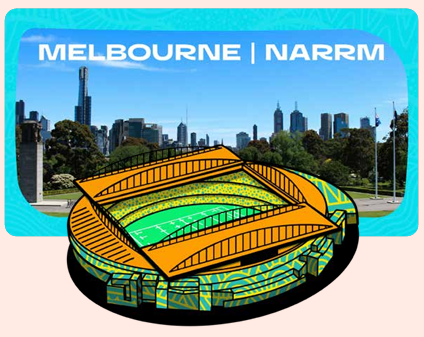
MELBOURNE | NARRM

Melbourne

Victoria · Melbourne Airport (MEL) — 30–45 min to the CBD

Docklands Stadium illustration

Docklands Stadium

The only fully enclosed venue of the tournament — the roof stays closed for every match, guaranteeing dry conditions. It hosted seven Rugby World Cup matches in 2003.

Capacity
53,000
Matches
Six pool matches and two Round of 16
Getting around
  • Southern Cross Station is a five-minute walk from the stadium and links to trams, trains and the airport bus.
  • Free Tram Zone covers the CBD and Docklands, so most match-day travel costs nothing.
  • The roof means no weather contingency is needed — but Melbourne outside the ground can shift four seasons in a day.
Things to do
  • Laneway coffee and rooftop bars around Degraves and Hardware Lane
  • Great Ocean Road drive to the Twelve Apostles
  • Yarra Valley wineries, an hour from the city
  • MCG and the National Sports Museum for sport history fans

SYDNEY | GADIGAL

Sydney

New South Wales · Sydney Airport (SYD) — 15–25 min to the CBD by train

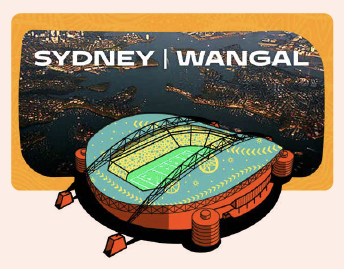
Stadium Australia illustration

Stadium Australia

The largest venue of the tournament, and one of only four stadiums in history — alongside Eden Park, Twickenham and Stade de France — to host a second Rugby World Cup Final.

Capacity
82,000
Matches
Two pool matches, two quarter-finals, two semi-finals, the bronze final and the Final
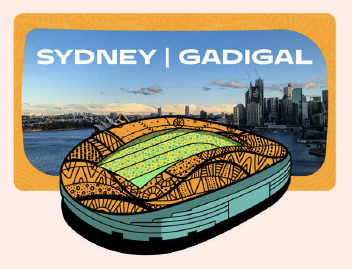
Sydney Football Stadium illustration

Sydney Football Stadium

Reopened in 2022 after a full rebuild. The most modern ground of RWC 2027, close to the city centre with steep, atmospheric stands.

Capacity
42,500
Matches
Three pool matches and two Round of 16
Getting around
  • Stadium Australia is at Olympic Park — take the train from Central and change at Lidcombe, or use the direct event services.
  • Sydney Football Stadium at Moore Park is served by light rail from Central and Circular Quay.
  • Ferries from Circular Quay to Manly and Watsons Bay are the best-value sightseeing in the city.
Things to do
  • Bondi to Coogee coastal walk
  • Sydney Opera House tour and Harbour Bridge climb
  • Blue Mountains day trip by train to Katoomba
  • Hunter Valley wine country, two hours north

NEWCASTLE | AWABAKAL-WORIMI

Newcastle

New South Wales · Newcastle Airport (NTL), or 2h30 by train from Sydney

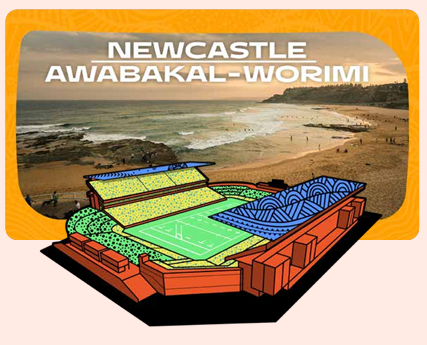
Newcastle Stadium illustration

Newcastle Stadium

Hosting Rugby World Cup matches for the first time in 2027. Its rugby heritage includes the British & Irish Lions' 1989 match against NSW Country and Australia's 2012 Test against Scotland.

Capacity
30,000
Matches
Four pool matches
Getting around
  • The stadium is walkable from central Newcastle; light rail runs along the harbour foreshore.
  • Trains from Sydney Central to Newcastle Interchange take about two and a half hours — a comfortable day-trip option.
  • A hire car is useful if you plan to combine matches with the Hunter Valley.
Things to do
  • Bathers Way coastal walk and the Bogey Hole ocean baths
  • Nobbys Head lighthouse at sunrise
  • Hunter Valley cellar doors, under an hour inland
  • Port Stephens dolphin cruises and Stockton sand dunes

TOWNSVILLE | GURAMBILBARRA

Townsville

Queensland · Townsville Airport (TSV) — 10 min to the city

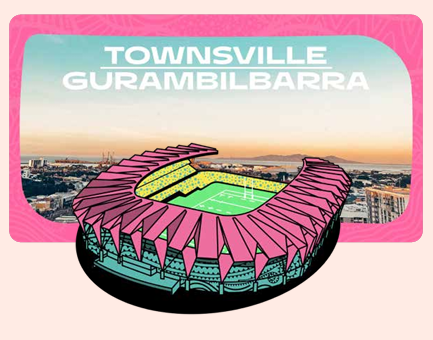
North Queensland Stadium illustration

North Queensland Stadium

Opened in 2020 and making its Rugby World Cup debut. Its striking roof design takes its shape from the tropical pandanus plant native to North Queensland.

Capacity
25,000
Matches
Four pool matches
Getting around
  • The stadium sits on the edge of the CBD — most city hotels are a 10–15 minute walk away.
  • Ferries run to Magnetic Island in 20 minutes from the Breakwater Terminal.
  • Book flights and accommodation early: Townsville has the smallest room inventory of the host cities.
Things to do
  • Magnetic Island for koalas, snorkelling and quiet bays
  • The Strand waterfront promenade and rock pool
  • Castle Hill sunrise climb
  • Great Barrier Reef and SS Yongala dive trips

Naming note

Why we show two names for every city

Throughout this guide each host city is written with its official tournament naming, pairing the city name with the name of the Traditional Owners' Country on which it sits — for example SYDNEY | GADIGAL. We follow World Rugby's host city naming guidelines in all of our Rugby World Cup 2027 communications.

World Rugby naming guidelines →

Plan around the venues

Build a route, not just a ticket.

Tell us which cities you want to base yourself in and we will shape flights, hotels, internal transfers and official match tickets into one itinerary — including safari or reef extensions either side of the tournament.

Quick links

Browse the experiences by stage and city, or start your enquiry and we will match you to the right venues.

Build my journey →View the experiences →